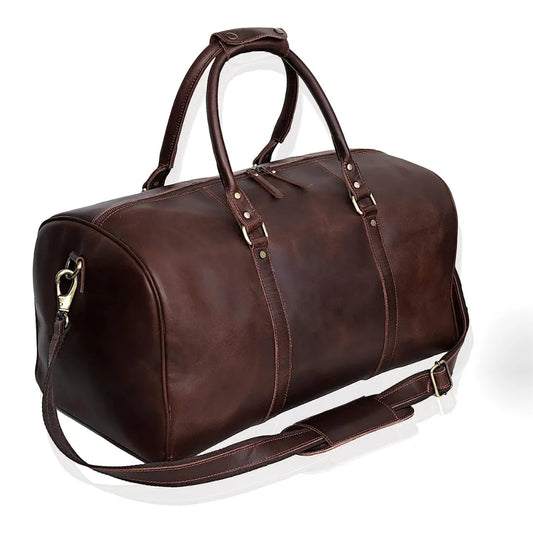
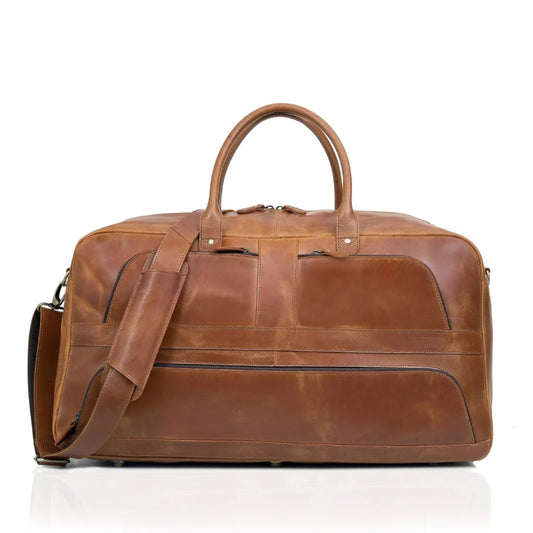
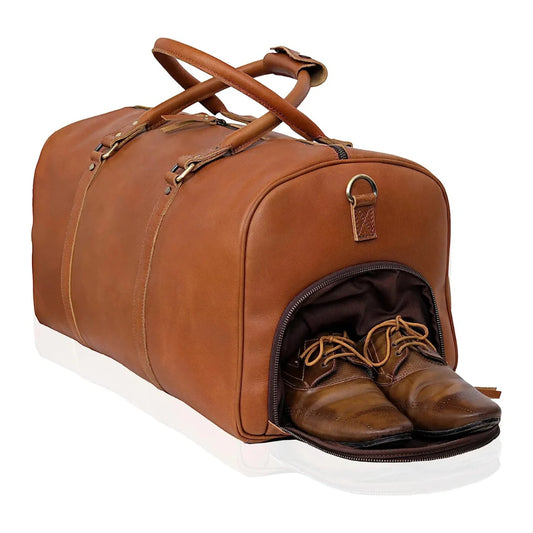
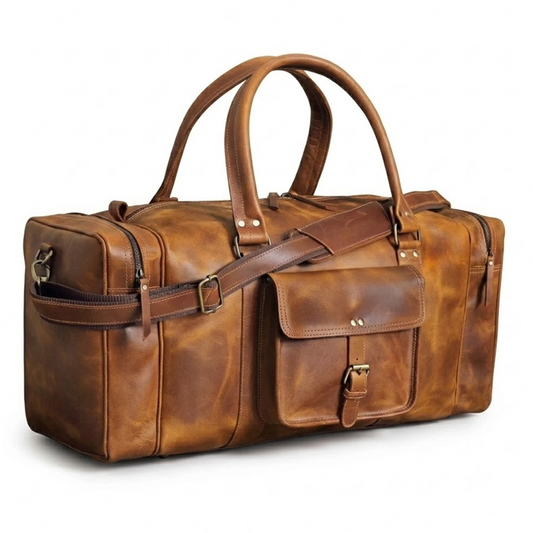
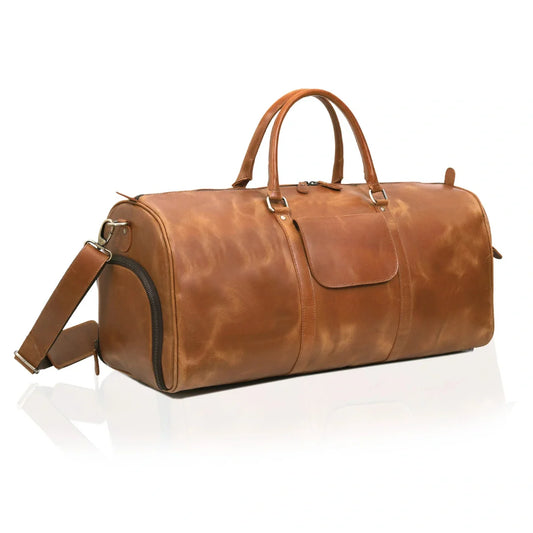
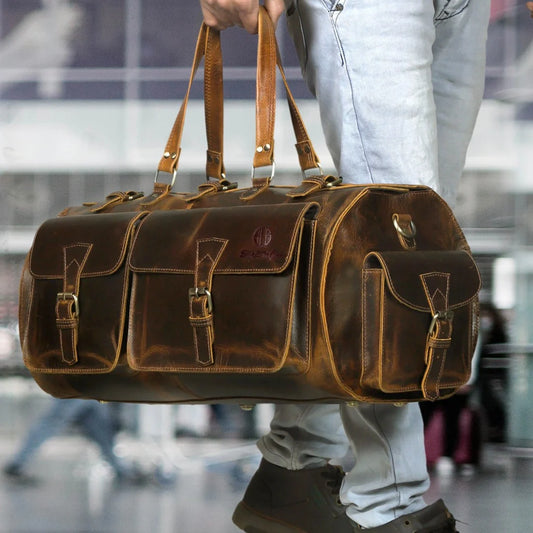
A duffle bag or a holdall, if you grew up calling it that gets tested in ways most other bags don't. It gets thrown in a boot, stood on in overhead lockers, dragged across station platforms and packed heavier than it was ever meant to be. So the question worth asking before you buy one isn't "does it look good" it's "will it still be doing its job in five years."
Our leather holdalls are built from full grain leather, which is the part of the hide most cheaper bags skip. It costs more to work with and it's heavier on the cutting table, but it's also the reason a men's leather duffle bag like this can carry weight without stretching out of shape, and why it looks better after a year of use rather than worse.
Picking the Right Size
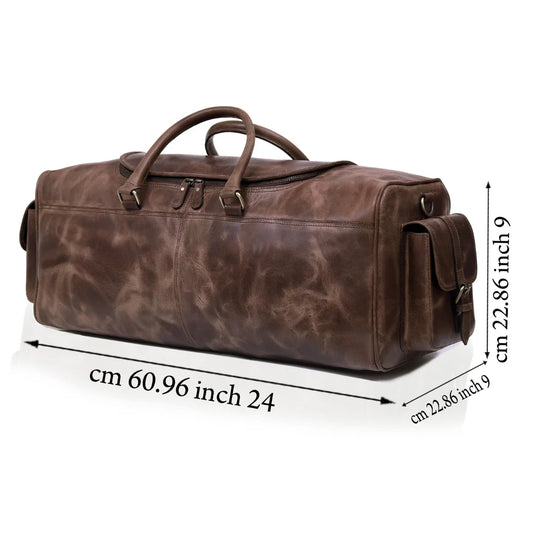
We make these in a range of sizes - 20", 24", 28" and 32" and the right one really does come down to the trip, not just preference.
The smaller end works as an overnight leather bag for a night or two away: enough room for a change of clothes, wash kit and shoes without the bag half-empty and shapeless. Step up to 28" or 32" and you're really in leather weekender bag territory room for a longer weekend, or for packing for two if you're sharing. Exact dimensions and what fits in each are listed on the individual product pages, since a couple of centimetres makes more difference than people expect once you're actually packing.
If you're planning to use it as carry-on, it's worth checking your airline's cabin bag allowance against the bag's dimensions before you buy leather doesn't compress the way soft canvas does, so getting the size right matters more here than with a typical holdall.
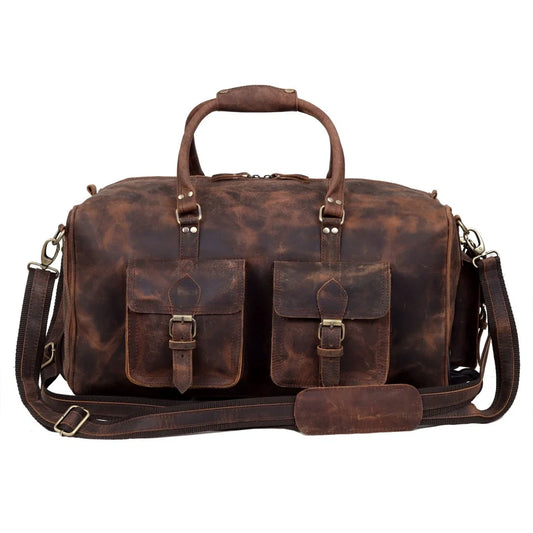
If you'd rather skip the deliberation, The elegant travel duffle bag is the one most people land on it's our best-reviewed duffle in the range and a safe starting point if you're buying your first one.
What's Actually Different About How These Are Made
A few details most product pages skip over.
- Full grain leather, not split - Full grain is the top layer of the hide, grain intact. Cheaper bags often use split leather instead the weaker layer underneath coated and printed to look the same. It peels within a year. Full grain just darkens and softens with age.
- Pigskin lining, not nylon - The lining takes the most abuse hands, keys, everything dragging across it on every pack and unpack. Nylon frays; pigskin holds up far longer.
- 316 stainless hardware, the marine grade - Cheap buckles dull and green within a couple of summers. This doesn't.
- German polyester thread - Stitched slightly wider than most (around five stitches per inch) nylon thread degrades under UV and heat, and tighter stitching perforates the leather more without actually making the seam stronger.
None of it shows in a photo. You'd only notice two years in, which is usually the point it matters most.
Who These Bags Actually Suit
Mostly it's people who travel enough that a flimsy bag becomes a genuine annoyance rather than a minor one regular weekend trips, someone who wants one leather travel bag that does gym kit on a Tuesday and an overnight stay on Friday, that sort of thing. Also a fair few people who just want something that looks right walking into a hotel rather than the bag that says "budget airline" the second you set it down.
We also sell a surprising number of these as gifts, which makes sense once you think about it most gifts end up in a drawer, this one gets used every month.
Looking After a Leather Duffle Bag
Full grain leather doesn't need much, but it does need something. Condition it two or three times a year with a proper leather conditioner, keep it away from direct heat sources like radiators or car boots in summer, and if it gets caught in the rain, let it dry naturally rather than near a heater. It'll cope fine with the odd shower on the way to the car it's not built for genuinely wet conditions like hiking or camping, and we'd rather say that plainly than oversell it. Treated properly, these bags are built to outlast most trips you'll ever take them on which is really the whole point of buying leather over canvas in the first place.



 25% OFFVendor:Saddle Leather Goods